
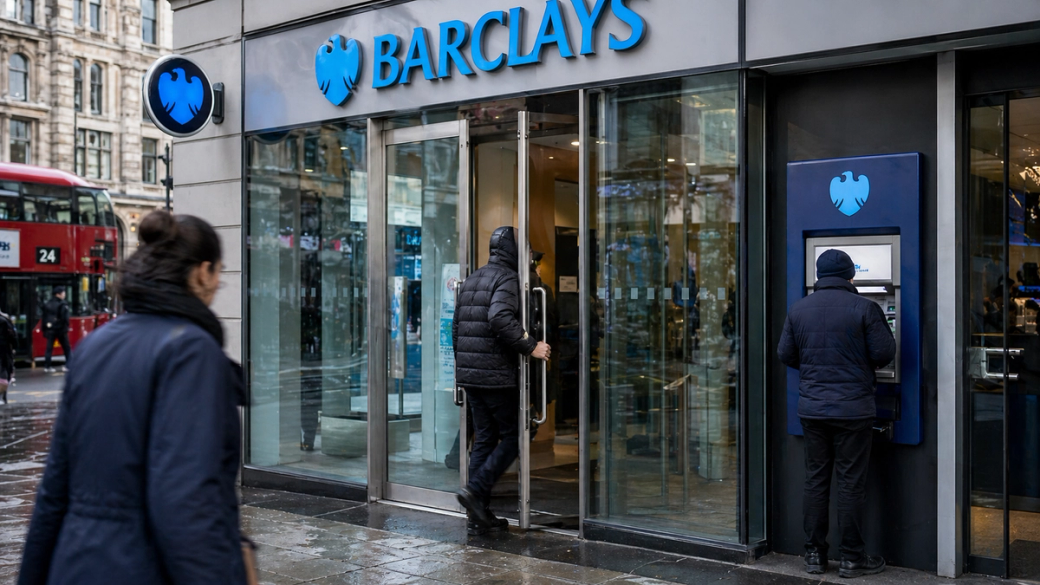
Barclays (LSE:BARC) reported a return on tangible equity of 14.8% for the first half of 2026, up from 13.2% a year earlier, as profit before tax rose to £6.1bn from £5.2bn.
The bank raised its full-year income target to approximately £31.5bn, up from c.£31bn, and lifted its 2026 net interest income guidance for the UK and Corporate Bank businesses to more than £13.7bn. Second-quarter income reached £8.3bn, up 16% year-on-year, with profit before tax of £3.3bn against £2.5bn a year earlier, and earnings per share climbing 43% to 16.7p.
"I am pleased with another strong quarter for Barclays", said chief executive C. S. Venkatakrishnan, noting the cost-to-income ratio improved to 54% from 59% a year earlier.
"Our performance supports distributions of £2.3bn for the first half of 2026, up 61% year-on-year."
The Barclays boss added: "We are upgrading the 2026 Group income target to c.£31.5bn and remain committed to, and confident in, delivering all financial and distribution targets for 2026 and 2028."
Barclays' investment bank business delivered a 16.0% RoTE as Global Markets and Investment Banking fees drove a 20% rise in divisional income, while the US Consumer Bank's income jumped 38%, boosted by a roughly £225m gain from selling the American Airlines co-branded credit card portfolio and the Best Egg acquisition.
Credit impairment charges rose to £1.4bn for the half, up from £1.1bn, with a loss rate of 62 basis points, including a £0.2bn single-name charge in the Investment Bank during the first quarter.
Barclays declared a half-year dividend of 5.9p per share, up from 3.0p, and announced a share buyback of up to £1bn, taking total first-half distributions to £2.3bn, up 61% year-on-year.
The CET1 ratio stood at 14.3%, within its 13-14% target range, or 14.0% after accounting for the announced buyback.
News Intelligence what this means for the company

Barclays lifted full-year income guidance to £31.5bn and raised its 2026 net interest income target for UK and Corporate Bank, driven by a strong H1 with profit before tax up 17% to £6.1bn and return on tangible equity climbing to 14.8%. The bank returned £2.3bn to shareholders in H1 (up 61% year-on-year) while maintaining a CET1 ratio of 14.3% within its 13–14% target, signalling confidence in both earnings momentum and capital adequacy.
- All divisions delivered double-digit returns on tangible equity, with the Investment Bank at 16.0% and US Consumer Bank income jumping 38% (boosted by the Best Egg acquisition and a £225m gain from the American Airlines card portfolio sale), reducing reliance on any single revenue stream.
- Cost-to-income ratio improved to 54% from 59% year-on-year, indicating operational leverage is widening despite the income growth, which supports the sustainability of the earnings uplift.
The guidance raise and capital return acceleration reflect genuine earnings momentum—not one-off gains—with Q2 income up 16% and profit before tax up 32% versus prior year. However, credit impairment charges rose to £1.4bn (from £1.1bn), and the loss rate of 62 basis points warrants monitoring if economic conditions deteriorate; the £0.2bn single-name charge in Q1 also signals concentration risk in the Investment Bank.
Insights assembled by AI. Editor-reviewed and grounded in tickstock’s coverage and proprietary knowledge graph.
Content is for informational purposes only, not financial advice.