
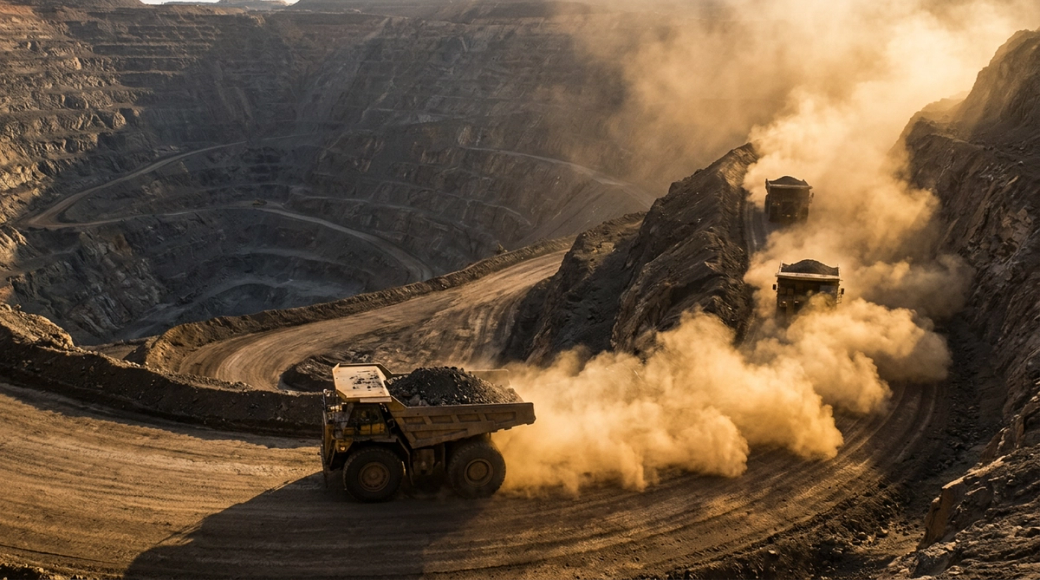
Kenmare Resources (LSE:KMR), which operates the Moma Titanium Minerals mine in Mozambique, told investors that weak ilmenite pricing in the first half is primarily a supply story centred on China, rather than a sign of falling demand.
Elevated Chinese ilmenite production is the main driver, with output from the Panzhihua region falling over the past 12 months but that decline more than offset by increases in Xinjiang linked to environmental factors.
"The major reason is elevated ilmenite production in China," said Head of Marketing Killian Murphy, during a presentation on the Investor Meet Company platform.
Murphy also pointed to rising imports of heavy mineral concentrate (HMC) into China, including material sourced from Mozambique, which has intensified competition because the ilmenite contained in that concentrate remains inside the Chinese market.
Kenmare's average selling price across products fell 26% year on year to $242 per tonne in the first half, with ilmenite down 29% to $203 per tonne, according to the research accompanying the presentation.
The company's ilmenite output itself dropped 39% year on year to 273,100 tonnes, a decline management has linked in part to lower ore grades and slower commissioning of its WCP A plant.
For Zircon, another commodity produced by Kenmare at Moma, it was a different story in the first half, with Murphy describing demand as strong even as prices came under pressure from a separate mechanism.
Transport cost inflation
Freight costs spiked following the US-Iran conflict in late Q1, hitting zirconite shipments into China particularly hard, and Kenmare said it could not pass those higher costs through in a weak pricing environment.
"We've been unable to pass them through, and that has impacted IRC prices further," Murphy said, adding that the resulting price weakness reflects a supply constraint rather than any softening in demand.
On the demand side of the ilmenite market, Murphy struck a more encouraging tone, citing record Chinese sulfate and chloride pigment production, with chloride pigment gaining share as higher sulfur and sulfuric acid prices push customers to expand chloride capacity.
He said results from Western pigment producers over the preceding weeks also pointed to improving volumes and prices, and that Kenmare sees a "solid order book" heading into the third quarter as those demand trends persist.
Asked whether the market might be nearing a turning point, Murphy said the company has heard anecdotal reports that low finished-product prices and elevated diesel costs are squeezing Chinese concentrate producers, and that some supply has already exited the market over the past year without restarting.
He cautioned, however, that there is "no clear sign yet that there's been sufficient product taken out of the market that's going to swing it in the near term."
News Intelligence what this means for the company

Kenmare's management attributes the 29% year-on-year drop in ilmenite prices to Chinese oversupply—specifically elevated Xinjiang production and rising heavy mineral concentrate imports—rather than weakening end-user demand, which they say remains solid based on record Chinese pigment production and strong Western volumes. The narrative hinges on a supply-side story: ilmenite weakness is temporary and structural to China's market, not cyclical demand destruction, though the company's own ilmenite output fell 39% year-on-year to 273,100 tonnes, a decline management links to lower ore grades and WCP A commissioning delays.
Management's demand-side optimism—citing record Chinese pigment production and a solid Q3 order book—offers some offset to near-term pricing pressure, but it does not address the company's rising net debt ($175.7 million at H1, up from $158.8 million at end-2025) or the structural production headwinds from WCP A underperformance and Namalope mine depletion. The case rests on whether Chinese oversupply eases and whether Kenmare can restore throughput to design rates before cash reserves erode further.
Insights assembled by AI. Editor-reviewed and grounded in tickstock’s coverage and proprietary knowledge graph.
Content is for informational purposes only, not financial advice.