
Broker scrutiny dominated the health and bio space, with Deutsche Bank delivering a pointedly downbeat verdict on Smith & Nephew's execution risk even as Hikma Pharmaceuticals posted a solid first half and reaffirmed guidance. Elsewhere, Solvonis Therapeutics won external validation for an early-stage addiction treatment candidate, while Novo Nordisk's "unusual" quarter left analysts unconvinced despite a headline beat.
Broker cuts Smith & Nephew target as pressures mount
Deutsche Bank has trimmed its price target on Smith & Nephew (LSE:SN.) to 1,250p from 1,400p, retaining a Hold rating on the medical devices group after Tuesday's financial results and a subsequent roundtable with chief financial officer John Rogers. The shares, at 1262.5p, have fallen 7% over the past week as investors digest a notably candid management assessment of competitive pressures in the group's US Reconstruction business, alongside admissions of prior forecasting errors.
Analyst Kane Slutzkin cut Deutsche Bank's 2027-2028 earnings-per-share estimates by a mid-single-digit percentage, primarily reflecting a slower-than-hoped recovery in orthopaedics, and calibrated the new target to the lower end of management's implied second-half guidance range rather than the top. The bank continues to see product launches and improving trends in orthopaedics and wound care as potential supports for a stronger second half, but is unwilling to bank on them until they show up in the numbers.
"The burden of proof now rests firmly on execution," said Kane Slutzkin, analyst at Deutsche Bank.
The tone of the note matters as much as the numbers: a Hold rating paired with candid management disclosures about forecasting misses signals that Deutsche Bank's patience is running thinner than the rating alone suggests. Smith & Nephew now carries a downside-skewed risk profile in the bank's eyes, and only sustained delivery in orthopaedics and wound care, not messaging around it, will be enough to shift that assessment before the next set of results.
Hikma grows core operating profit, repeats FY guidance
Hikma Pharmaceuticals (LSE:HIK) reported group revenue of $1.728 billion for the six months to 30 June, up 4% year-on-year, with core operating profit rising 9% to $405 million. Reported operating profit jumped 30%, though the multinational pharmaceutical group attributed much of that swing to a weak comparator period last year, when a non-core legal settlement tied to sodium oxybate hit results. Shares in Hikma rose 8.657% to 1707.0p.
Performance was uneven across divisions. Branded revenue climbed 15% to $502 million with core operating profit up 23% and margins of 32.5%, while Injectables revenue held flat at $685 million as core operating profit fell 8% to a 27.6% margin. Hikma Rx revenue was steady at $520 million, but core operating profit there rose 16%, and operating cashflow improved to $214 million from $161 million a year earlier. "I am pleased to report a solid first half with performance in line with our expectations... I remain confident in our outlook and we are reiterating our full-year guidance," said Said Darwazah, chief executive.
The reiterated guidance, paired with margin gains in Branded and Rx even as Injectables softened, points to a business successfully offsetting pricing pressure in its generics-heavy segment with growth elsewhere. The scale of the reported profit jump flatters the picture given last year's one-off legal charge, but the underlying core operating profit growth suggests the improvement is not purely a comparator effect.
Solvonis Therapeutics' stimulant use disorder candidate outperforms in early results
Solvonis Therapeutics (LSE:SVNS) said its SVN-015 compound will advance into further studies under the U.S. National Institute on Drug Abuse's Addiction Treatment Discovery Program, having cleared an initial round of cardiac safety and off-target screening. The London-listed, late clinical-stage biopharmaceutical group, which develops small-molecule treatments for central nervous system disorders, saw SVN-015 accepted into NIDA's programme in December; shares rose 3.571% to 0.145p.
On the cardiac ion-channel measures assessed so far, SVN-015 showed a more favourable profile than GBR-12909, an earlier dopamine transporter inhibitor NIDA evaluated for cocaine dependence that carried known cardiac risks. "These early results suggest that SVN-015 may have the potential to deliver the intended transporter pharmacology while avoiding some of the cardiac ion-channel liabilities associated with previous compounds in this area," Anthony Tennyson, chief executive. David Nutt, added that "NIDA's decision to progress SVN-015 provides important external validation of the case for its further evaluation and gives Solvonis access to specialist, non-dilutive preclinical development capabilities."
The non-dilutive nature of NIDA's funding for the next phase is the key detail for shareholders: external validation of the science arrives without Solvonis having to fund the work itself or issue further equity, a meaningful consideration for a micro-cap biopharma at this stage of development.
Investment bank stays on fence over Novo Nordisk after tepid results
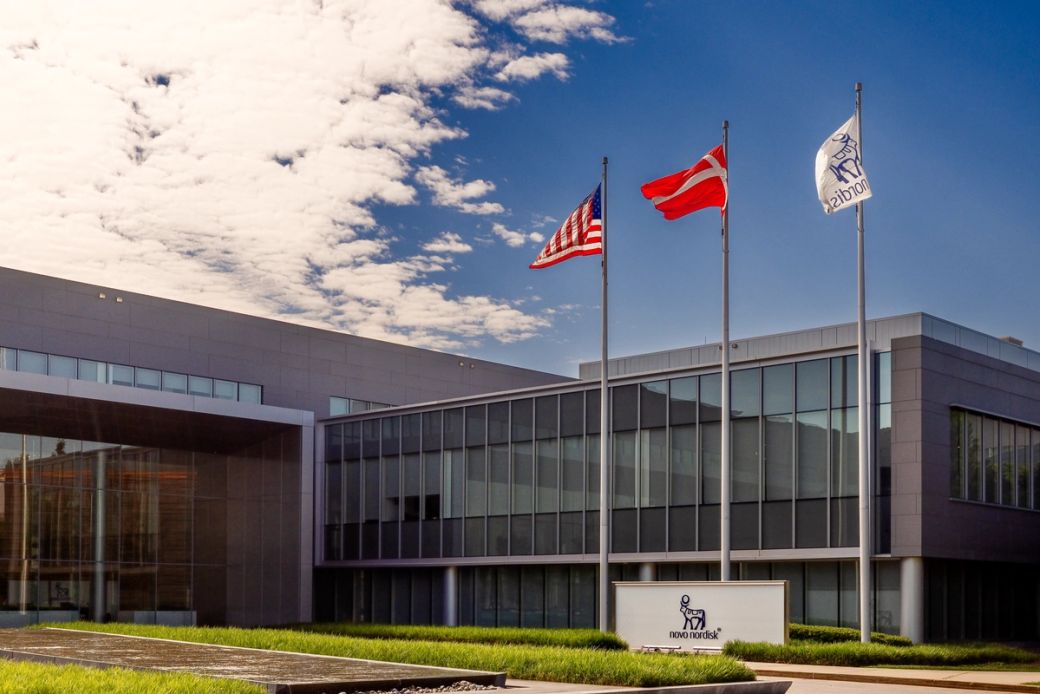
Deutsche Bank described Wednesday's second-quarter results from Novo Nordisk (NYSE:NVO) as "an unusual print," repeating a Hold rating with a DKK290 price target against a current price of around DKK294.3. Shares in the Danish diabetes and obesity drugmaker edged up 0.56% to 44.53p on the London listing.
Analyst Emmanuel Papadakis noted the headline 10% revenue beat was driven by Ozempic and insulins, aided by rebate adjustments, rather than by Wegovy, the company's other blockbuster weight-loss drug, which came in broadly in line. Both oral and injectable Wegovy missed expectations in the United States, he added, while lower operating expenses helped deliver a 16% beat at the EBIT line.
Novo Nordisk lifted the top end of its full-year revenue and EBIT guidance ranges by 4%, leaving the new range spanning flat to down 6% for the year. Papadakis argued this does little more than reflect the second-quarter beat rather than signal genuine momentum, a reading that keeps Deutsche Bank on the sidelines and underscores that Wegovy's US underperformance, not accounting-driven Ozempic strength, remains the real swing factor for the stock.