
BSF Enterprise's (LSE:BSFA) shares are no strangers to volatility, so there should little surprise to see a strong reaction on Tuesday to news of licensing deal that promises a lot for the London-listed small-cap.
The AIM-quoted stock jumped 25%, to 1.2689p, after the company announced a Heads of Terms agreement handing SCHAKAU Managementberatung exclusive worldwide rights to commercialise ETSYL, its collagen-stimulating peptide, across cosmetics, skincare and luxury beauty.
SCHAKAU gets a 10-year initial exclusivity window, conditional on hitting annual volume targets once a 12-month ramp-up period ends, and has put roughly €300,000 behind clinical claim substantiation, regulatory filings and the launch of ETSYL as the core active in its luxury skincare brand HANDS OF GOD.
BSF keeps ownership of the underlying patents and manufacturing know-how, supplies the raw bioactive material on a dose-based schedule, and splits net licensing income from any third-party brand deals 50:50 with SCHAKAU after compliance and patent costs are deducted.
Why it matters
ETSYL was developed in-house to stimulate collagen synthesis in tissue scaffolding, not as a commercial cosmetics ingredient. Its repurposing into a licensed skincare active gives BSF a second, distinct revenue channel that runs alongside the leather business, and one that costs the company nothing to develop further: SCHAKAU is funding the regulatory and brand-launch work, and BSF's contribution is supply and IP.
Chief executive Che Connon framed the structure directly: "This transaction validates our strategy of converting platform science into non-dilutive commercial cash flows."
For a group that has relied on placings and loan notes to fund its subsidiaries, a licensing arrangement that produces supply revenue without requiring fresh capital or diluting shareholders is a different kind of deal to the ones that have moved the shares so far this year.
About the company
BSF Enterprise is an AIM-listed group that develops bio-manufactured materials and regenerative-tissue products through a set of specialist subsidiaries, sitting somewhere between consumer luxury goods and cell-culture biotechnology.
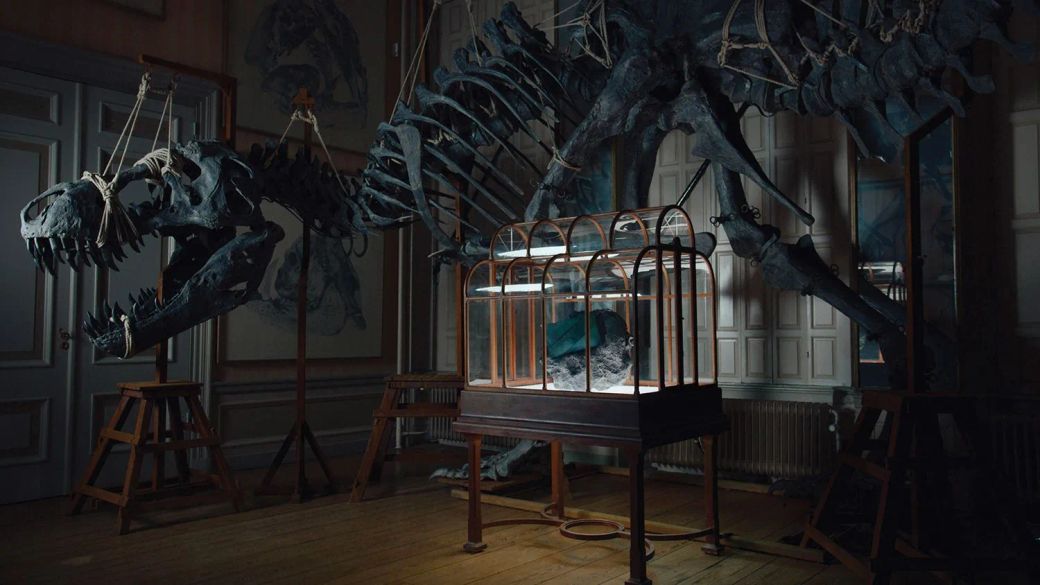
Lab-Grown Leather (LGL) is the most visible of these, producing cultivated leather via a scaffold-free platform called ATEP™; a technical white paper published in 2026 described a T-Rex Leather™ material built from a reconstructed dinosaur collagen sequence, engineered through AI protein modelling and expressed in animal cell lines.
Alongside LGL, the group runs Kerato, developing a corneal hydrogel for veterinary and eventual human use, and 3D Bio-Tissues, which supplies culture media to biopharma and cultivated-meat customers.
Management describes 2026 as a transition year, moving each subsidiary from research towards commercialisation while pursuing what it calls anti-dilutive, subsidiary-level financing rather than group-wide equity raises.
How it got here
The ETSYL licence lands on top of a string of events that have made BSF one of the more volatile names on AIM this year.
Recently, in June, a £1m interest-free convertible loan from Indigo Capital gave the group working capital, with chairman Geoff Baker saying it provided additional financial flexibility as the company developed its tissue-engineered product portfolio. Days later, the Drouot auction of the 'Enfin Leve' T-Rex Leather™ handbag, carrying an official appraisal estimate of €500,000, was billed by Connon as a watershed moment.
It did not go to plan. The handbag failed to meet its reserve at auction, and the shares fell sharply as a result. Connon's recovery line followed within days: the commercial validation the company required had been emphatically achieved even though the public bidding fell short of the historic reserve. By late June, the group's Cannes Lions wins for the T-Rex Leather campaign gave Connon room to argue the story was shifting from novelty to industrial implementation.
August brought two commercial agreements in quick succession. On 3 August, BSF struck a 50/50 North America joint venture with IMPOSTER to commercialise T-Rex Leather™, contributing technology licensing and material supply but no cash capital. Eight days later came the ETSYL licence, and the market's response was immediate: the shares rose 13.9% to 1.15p on the day the deal was announced, before today's further advance.
Market view
As we said at the beginning, BSF has had a volatile year.
To avoid overstating how volatile: at 1.06p today, BSF shares are down 44% in 2026 to date. The 52-week high is marked at 4p, and the 52-week low is marked at 0.5p.
And, it's not just one-way traffic. This is a small-cap that has a habit of moving on its news (good and bad).
What's ahead
SCHAKAU's 12-month ramp-up period for ETSYL is where the deal's substance will be tested: initial supply revenues are expected to flow to BSF during that preparation phase, ahead of any judgement on whether SCHAKAU meets the annual volume targets that determine whether its 10-year exclusivity holds.
On the leather side, the IMPOSTER joint venture's category exclusivity for North America activates only if IMPOSTER transfers between US$500,000 and US$1,000,000 of ring-fenced operational funding from its planned $3.5 million growth capital raise — a condition that sits outside BSF's control and will determine how quickly that venture moves beyond small luxury goods such as bag charms, keyrings and bespoke handbags.
Management continues to describe 2026 as a transition year across all three subsidiaries, with Kerato's veterinary regulatory progress and 3D Bio-Tissues' commercial pipeline conversion named as the other milestones it is working toward alongside the leather and peptide licensing tracks.
The wrap
The ETSYL licence gives BSF Enterprise a second commercial route that, on its own terms, requires no further cash from the company and leaves its patents intact, a structural contrast to a leather story that has swung from a failed auction reserve to a funded US joint venture inside two months; today's 25.63% move extends a run in which the shares have become a direct read-out of whichever announcement landed most recently, rather than of any settled view of the business.
Stock Intelligence is an editorial feature compiled from tickstock's own reporting, company disclosures and cited third-party research. It is not investment advice, a recommendation or an invitation to deal in any security. Third-party views are attributed to their source. Always do your own research.