
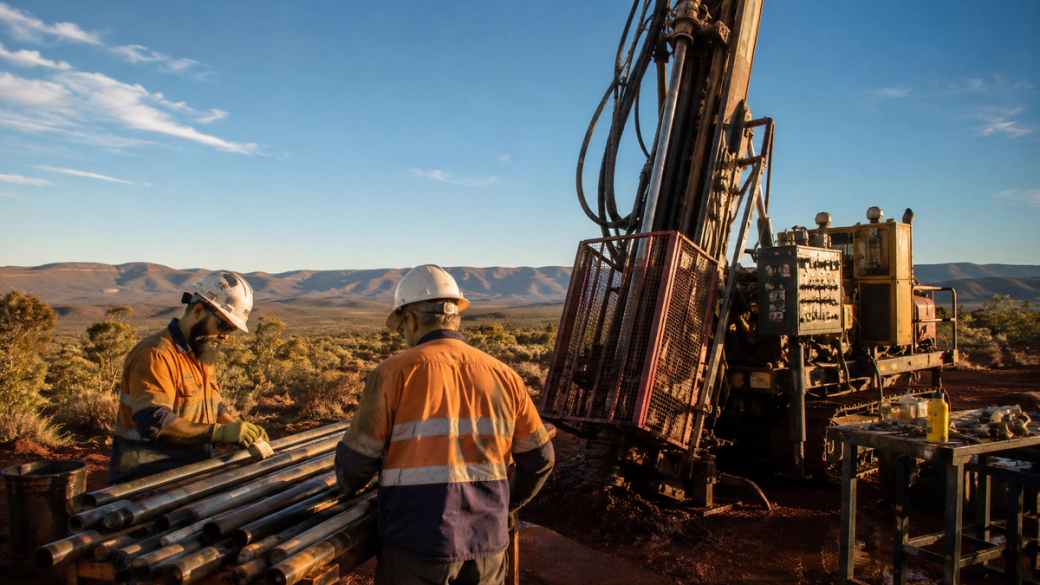
Great Western Mining Corporation (AIM:GWMO), a strategic minerals exploration and development company, has completed a reverse circulation drilling campaign at its Defender Tungsten Project in Mineral County, Nevada.
The programme covered roughly 8,500 feet (2,590 metres) across 23 holes, drilled to depths of between 200 feet (61 metres) and 600 feet (183 metres).
Geological field logging and shortwave ultraviolet inspection confirmed multiple holes intersected scheelite-bearing skarn across wide intervals, targeting the ground between the historic Defender and Pine Crow mines over roughly 1 kilometre of strike.
Defender Hill returned 100 feet (31 metres) of continuous skarn with visible scheelite throughout, while Dough God Mine yielded 125 feet (38 metres) of continuous skarn from surface with abundant scheelite observed across the full interval.
Pine Crow Mine showed a narrower 30-foot (9-metre) interval but with intense scheelite fluorescence.
The subsurface results echo surface channel sampling the company reported on 7 July, building a consistent picture of tungsten mineralisation from surface to depth.
Samples have been sent to American Assay in Reno, with results expected in the fourth quarter to feed into a maiden mineral resource estimate being prepared by Addison Mining Services.
"Intersecting broad zones of scheelite bearing skarn across several targets is highly encouraging and validates our geological model for the district", said chief executive Ed Loye.
News Intelligence what this means for the company

Great Western Mining has completed an 8,500-foot reverse circulation drilling campaign at Defender, with field logging and UV inspection confirming scheelite-bearing skarn across 23 holes spanning a 1-kilometre strike between historic mines. The company is on track toward a maiden mineral resource estimate by end-2026, with assay results expected in Q4 to validate the geological model and quantify tungsten mineralisation from surface to depth.
The drilling validates the subsurface continuity of tungsten mineralisation that surface sampling had suggested, removing a key exploration risk ahead of the resource estimate. However, the investment case remains dependent on assay grades and widths—field observation of scheelite presence is necessary but not sufficient to establish economic viability.
Insights assembled by AI. Editor-reviewed and grounded in tickstock’s coverage and proprietary knowledge graph.
Content is for informational purposes only, not financial advice.