
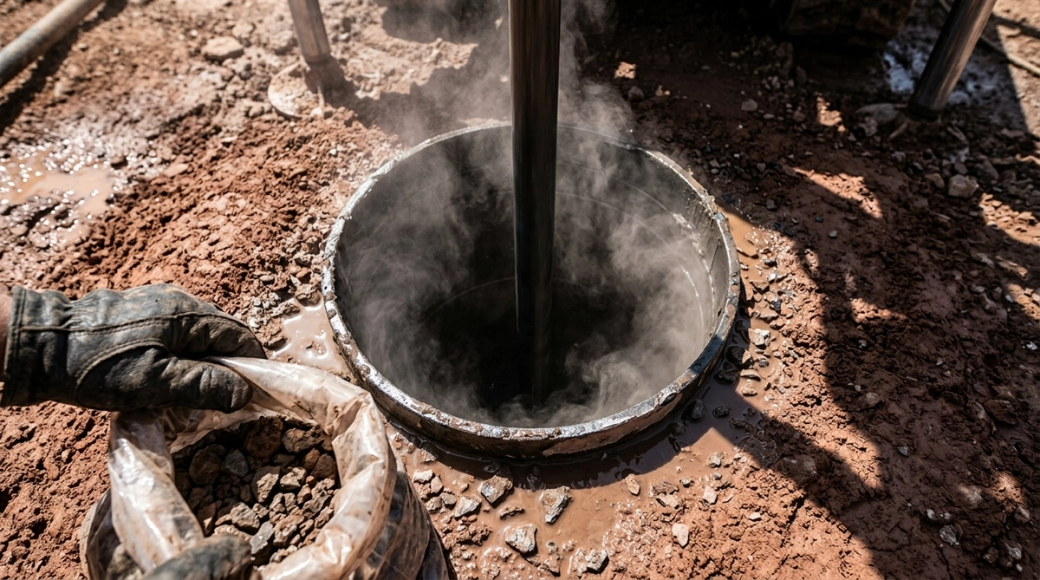
GoldStone Resources (AIM:GRL), the AIM-listed gold producer operating the Homase mine in Ghana, has begun reverse circulation drilling to define pit shells at the proposed Pit 5 and Pit 6 oxide mining areas.
The roughly 2,000-metre programme targets near-surface oxide mineralisation within the Homase Trend, part of the structural corridor hosting the company's JORC-compliant 602,000 ounce mineral resource.
Results will feed into resource modelling and pit design, aimed at expanding mineable oxide inventory and supporting the next phase of mine development.
"We are pleased to have commenced the pit definition drilling programme at Homase," said chief executive Emma Priestley, adding the work "represents another step in our strategy to optimise the mine plan."
Gold production for the six months to 30 June totalled approximately 46.43 kilograms of doré, equivalent to approximately 1,214.4 troy ounces sold, with output affected by Ghana's rainy season, which typically runs from March to September.
The company is upgrading its heap leach circuit, replacing raw water and solution pumps in service for over six years, alongside new solution channels and piping to reduce dilution.
It is also reviewing expansion of adsorption capacity to improve gold recovery.
Mining continues from Pit 3, while Pad 6 stacking began in May, with further earthworks expected to allow installation of leak detection pipework and geomembrane in late third quarter.
News Intelligence what this means for the company

GoldStone Resources has launched a 2,000-metre reverse circulation drilling programme to define pit shells at Pits 5 and 6 at its Homase mine in Ghana, feeding into resource modelling and pit design to expand mineable oxide inventory. First-half production totalled 1,214.4 troy ounces of gold, constrained by Ghana's rainy season; the company is simultaneously upgrading its heap leach circuit and beginning Pad 6 stacking to support the next phase of mine development.
The pit definition drilling and circuit upgrades represent incremental steps toward expanding production capacity, but the first-half output of ~1,200 oz remains modest relative to the company's 602,000-ounce mineral resource, and seasonal weather constraints persist. The announcement lacks detail on timeline, capital requirements, or production guidance for the expanded pit phases, leaving visibility on near-term production uplift limited.
Insights assembled by AI. Editor-reviewed and grounded in tickstock’s coverage and proprietary knowledge graph.
Content is for informational purposes only, not financial advice.