
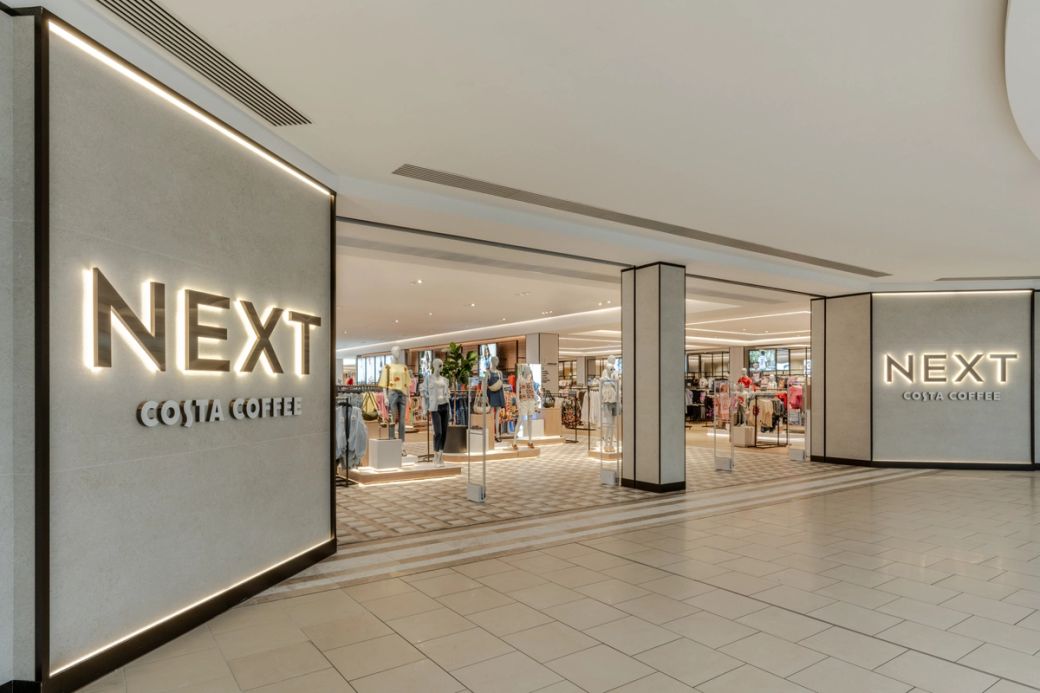
Retailers that trade on the high street are supposed to be at the mercy of the weather, the consumer and the calendar. Next has spent years appearing to defy that logic, issuing conservative guidance and then quietly clearing it, quarter after quarter, until the pattern itself became the story. The latest instalment came when full-price sales rose 9.2% in its second quarter, more than double the 4.0% the company had pencilled in — a gap of £70m in sales that forced yet another upgrade to full-year profit guidance.
For a business often filed under the unglamorous end of consumer discretionary, that consistency is what makes Next editorially interesting: not a single dramatic event, but a long run of small ones that add up to a retailer whose international arm now grows faster than its UK heartland, and whose forecasting discipline has become as much a talking point as its clothes.
About the company
Next plc is a British clothing, footwear and home furnishings retailer that sells to women, men and children through three connected channels: physical Next stores, the long-running Next Directory catalogue business, and Next Online. The combination — bricks-and-mortar retail bolted onto a mail-order heritage that migrated early into e-commerce — has left the group with a distribution and fulfilment capability that now extends well beyond its own brand.
Operations are concentrated in the UK and Ireland, but the international side of the business has become an increasingly important growth engine, with overseas markets in the Middle East and Northern Europe now shaping the group's quarterly results almost as much as the domestic weather does.
The story so far
The current run of upgrades traces back to preliminary results for the year to January 2026, filed in March, and picked up pace with a trading statement for the 13 weeks to 2 May. First-quarter full-price sales rose 6.2%, against a company forecast of 4.0%, prompting an upgrade to full-year profit guidance to £1,218m. The detail was more textured than the headline: a very strong opening five weeks of growth above 11%, then disruption in weeks six to eight tied to the Middle East conflict, before deliveries recovered through the rest of the quarter.
That resilience carried into the second quarter. Full-price sales growth accelerated to 9.2%, again well ahead of forecast, with £19m of the outperformance coming from the UK and £51m from overseas.
Next attributed the beat to warm UK weather echoing the previous year's exceptional summer, pent-up demand releasing in the Middle East and Northern Europe after a softer first quarter, and marketing spend that ran higher than planned.
Full-year pre-tax profit guidance was raised again, by £25m to £1,243m — up 7.3% on the prior year — with £15m of that increase attributed to additional full-price sales and £10m to stronger performance in the group's equity investments.
Alongside the sales upgrades, Next lifted its share buyback guidance for the year to £524m, having already repurchased £355m of shares at an average price of £127.69, reducing shares in issue by 2.3%.
The company has scheduled its first-half results for 17 September, the next point at which the market will test whether the upgrade cycle has more road left to run.
Market view
With a market capitalisation of just over £14.5bn, the retailer is seen to have a valuation that brokers routinely describe as premium.
That premium, versus the rest of the sector, is the crux of the debate among analysts covering the stock.
Deutsche Bank has maintained a Hold rating while raising its price target to 16,000p from 14,000p, framing the elevated rating as justified by earnings diversification and the growing contribution from international markets and equity investments.
Shore Capital has taken a more constructive line, reiterating a Buy rating and lifting its target to 17,500p after raising adjusted pre-tax profit forecasts by around 3% across its forecast period, citing international sales growth of 37% in the quarter as the standout driver and arguing there is long-term value even at current ratings.
Hargreaves Lansdown's Aarin Chiekrie has offered the most pointed summary of the pattern investors are watching: "Next has developed a track record of under-promising and over-delivering in recent years." Chiekrie's coverage has also tracked the cost side of the story, noting that the group's near-term disruption hit assumption, largely tied to the Middle East, moved up to around £47m from an earlier estimate near £15m, even as double-digit online and international growth offset a mid single-digit decline in store sales.
Milestones and metrics to watch inlcude second-half sales growth, guided at 2.8%, and whether it materialises against tougher comparatives; whether international growth, expected to moderate to around 14% as last year's switch to ZEOS distribution services in the European aggregator business laps itself; and how margin holds up against regional disruption costs.
The wrap
Next enters its next scheduled update, slated for 17 September, with guidance that has already been raised twice this year, a buyback programme running ahead of plan, and a broker base split between those treating its premium rating as earned and those content to hold at current levels while the pattern of upgrades continues to play out.
Stock Intelligence is an editorial feature compiled from tickstock's own reporting, company disclosures and cited third-party research. It is not investment advice, a recommendation or an invitation to deal in any security. Third-party views are attributed to their source. Always do your own research.