
BHP Group (LSE:BHP) reported attributable profit of $9.8bn for the year to 30 June, up 9% on the prior year, as the world's largest miner delivered what it called an industry-leading cost position across most of its portfolio.
Underlying EBITDA rose 27% to approximately $33bn, driven by record iron ore production at Western Australia Iron Ore (WAIO) and copper output of roughly 2m tonnes for a second consecutive year.
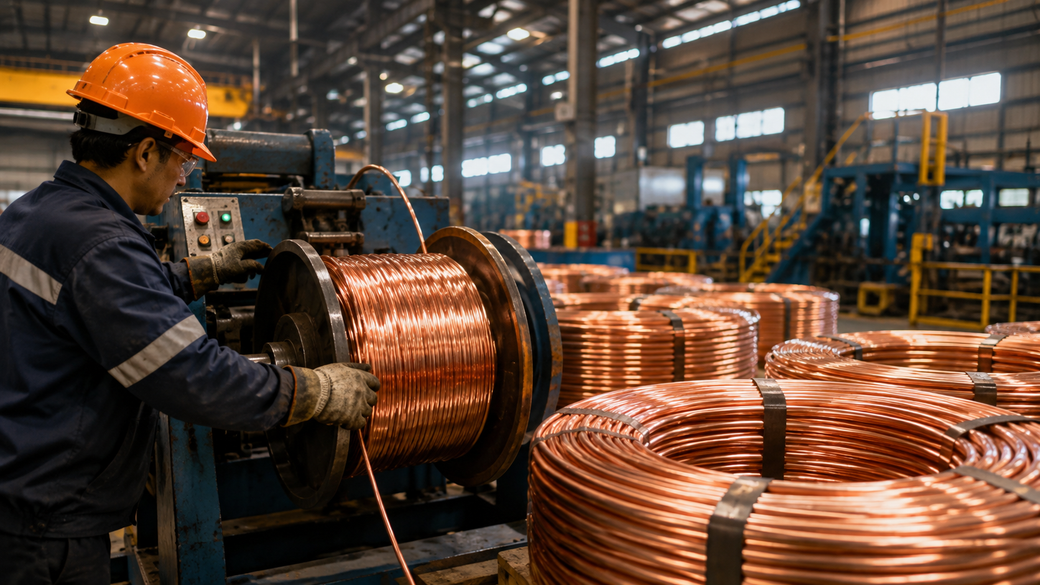
Copper generated more than $18bn in underlying EBITDA, 54% of the group total, marking the first time the metal has outweighed iron ore as BHP's primary earnings driver.
"Copper is the engine that is driving BHP's growth," said chief executive Brandon Craig, noting the division's $6.9bn of free cash flow now funds its own expansion.
Net debt fell to $8.7bn from $12.9bn a year earlier, below the company's $10bn to $20bn target range, helped by $4.3bn in silver streaming proceeds and a $2bn infrastructure payment tied to WAIO's power needs.
The board declared a final dividend of 99 US cents per share, a 72% payout ratio and the largest since FY2022, bringing total shareholder returns since 2016 to more than $115bn.
BHP approved $0.5bn in pre-commitment funding for a new concentrator at Escondida ahead of a final investment decision expected in calendar 2027-28, while a potential Stage 1 decision on the Vicuña joint venture with Lundin Mining could arrive as early as the end of this year.
A contracting colleague was fatally injured at BMA's Peak Downs mine in July, with investigations ongoing.
News Intelligence what this means for the company

BHP's underlying EBITDA surged 27% to $33bn, driven by record iron ore output and copper hitting 2Mt for a second year running—with copper now generating 54% of group EBITDA and overtaking iron ore as the primary earnings engine for the first time. Net debt fell to $8.7bn, well below the $10bn–$20bn target band, and the board declared its largest dividend since FY2022 at a 72% payout ratio, signalling confidence in cash generation and capital discipline.
Copper's ascent to BHP's dominant profit driver, combined with the division's $6.9bn free cash flow now self-funding expansion, materially shifts the company's growth profile away from iron ore volatility. The $8.7bn net debt position and record dividend underscore pricing strength, though the fatality at Peak Downs and ongoing investigations add operational risk to monitor.
Insights assembled by AI. Editor-reviewed and grounded in tickstock’s coverage and proprietary knowledge graph.
Content is for informational purposes only, not financial advice.
