
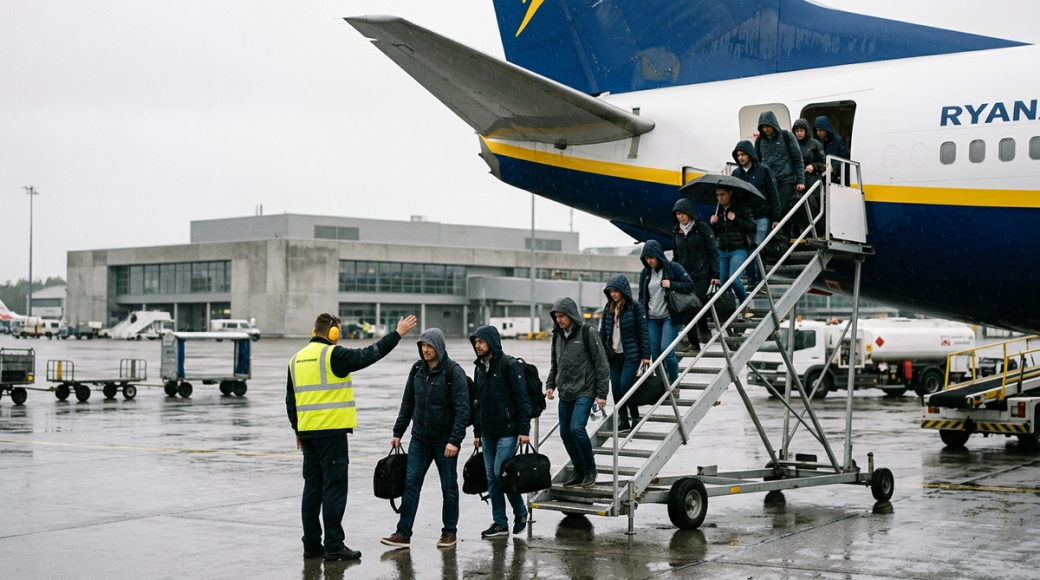
Ryanair Holdings reported first-quarter profit after tax of €538m on 20 July, down 34% from €820m a year earlier.
The budget carrier said the price of its unhedged jet-fuel, roughly 20% of its total fuel needs, more than doubled to $150 a barrel, driving unit costs up 5%.
Traffic grew 6% to 61.3m passengers, but average fares fell 6% as the Middle East conflict stoked consumer hesitancy and pushed bookings later, while the prior-year quarter had benefited from a full Easter falling in April.
Revenue rose 1% to €4.38bn, with scheduled revenue down 1% to €2.91bn and ancillary revenue up in line with traffic at €1.47bn.
Operating expenses climbed 11% to €3.81bn, partly reflecting the end of supplier compensation payments following delivery of the final Boeing 737-8200 "Gamechanger" in February.
Ryanair repaid its final €1.2bn bond in May, leaving the group debt-free with gross cash of over €2.8bn at the end of June.
Fuel hedging remains central to the group's cost advantage: fiscal 2027 fuel is 80% hedged at roughly $67 a barrel, with fiscal 2028 now 15% hedged at roughly $85 a barrel.
Chief executive Michael O'Leary said the group has "zero H2 visibility" and that it remains "far too early to provide any meaningful FY27 PAT guidance".
The group still targets 4% full-year traffic growth to 216m passengers, split between 6% growth in the first half and 2% in the second.
News Intelligence what this means for the company

Ryanair's first-quarter profit fell 34% to €538m as unhedged fuel costs more than doubled to $150/barrel, offsetting 6% traffic growth and a debt-free balance sheet achieved in May. Revenue rose only 1% despite higher passenger numbers, as average fares fell 6% due to Middle East conflict-driven booking delays and a prior-year Easter benefit that did not repeat. The airline now faces H2 visibility constraints and has provided no FY27 guidance, signalling uncertainty ahead.
The profit collapse exposes Ryanair's vulnerability to unhedged fuel exposure: the 20% of fuel costs left unhedged swung from ~$75/barrel to $150/barrel year-on-year, erasing gains from scale and operational leverage. While fiscal 2027 fuel is 80% hedged at roughly $67/barrel, the 15% hedge on fiscal 2028 at $85/barrel leaves material downside risk if crude remains elevated, and management's refusal to guide on FY27 profit reflects genuine uncertainty about demand and cost trajectory.
Insights assembled by AI. Editor-reviewed and grounded in tickstock’s coverage and proprietary knowledge graph.
Content is for informational purposes only, not financial advice.
Deutsche Bank rates Ryanair Buy at €30 target
Deutsche Bank analyst Jaime Rowbotham descrined the airline's 1Q27 result as a revenue-driven miss, with net profit €538m about 7% below consensus, and fares per passenger down roughly 6% year‑on‑year.
He nevertheless repeated a Buy rating with a €30 price target, yet flagged 2Q fares as trending "modestly down", which is seen as the principal near-term headwind to FY27 profit consensus.
The DB analyst also highlighted Ryanair's financial buffer, noting end‑June net cash of about €2.65bn, roughly €700m of a €750m buyback completed and 15% of FY28 fuel now hedged at $848/mt.