
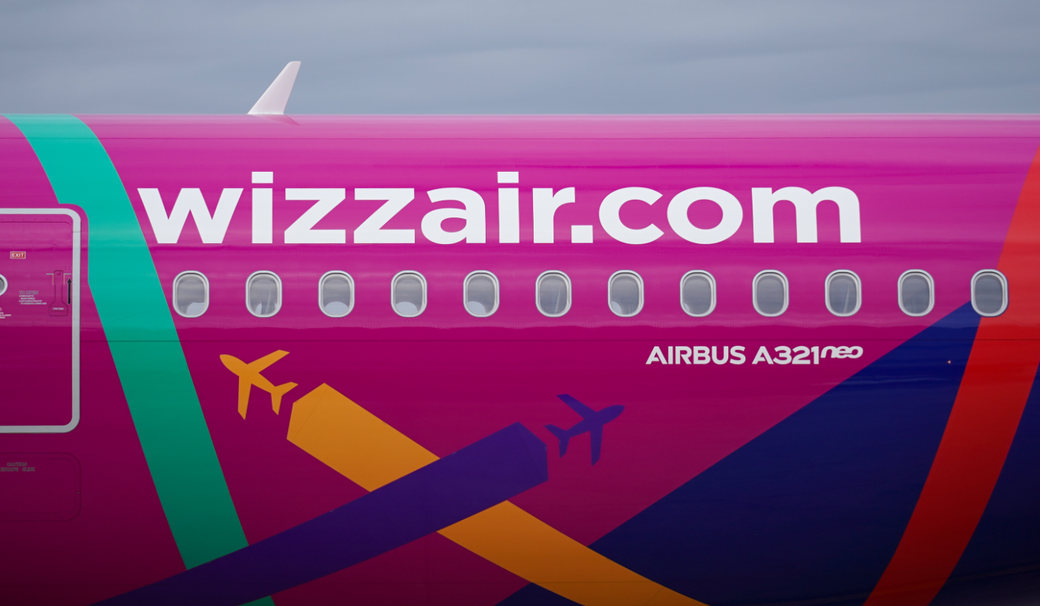
Wizz Air Holdings (LSE:WIZZ), the Budapest-based ultra-low-cost airline, swung to a net loss of €198.2 million in the three months to 30 June, reversing a €38.4 million profit in the same period last year.
Revenue rose 5.5% year-on-year to €1,507.4 million, as passenger numbers jumped 25.1% to 21.2 million on a 14.9% increase in capacity. Revenue per available seat kilometre (RASK) fell 8% year-on-year, a result of the aggressive capacity growth, while the load factor slipped marginally to 90.9%.
Chief executive József Váradi attributed the loss "in particular" to the 21% rise in unit fuel costs, adding that the group operates "with a strong balance sheet, more than €2 billion of cash and a liquidity ratio of 37%, which is amongst the strongest in the industry."
Cash stood at €2,212.2 million at quarter-end, up 4% from March, though net debt rose to €5,134.5 million from €4,941.5 million as new aircraft deliveries pushed leverage to 4.4 times EBITDA, up from 3.7 times at the F26 year-end.
Moody's cut Wizz Air's rating from Ba2 to Ba3 in June, citing weaker-than-expected profitability and elevated leverage from GTF engine disruption and fuel costs; Fitch affirmed its BB rating the same month.
Grounded aircraft fell to 27 from 41 a year earlier, with the company expecting 15-20 groundings by the end of F27 and none by the end of calendar 2027.
For the second quarter, Wizz Air guided to RASK down low single digits and fuel unit costs up mid-to-high single digits, with capacity up around 20% on ASKs.
News Intelligence what this means for the company

Wizz Air swung to a €198.2 million net loss in Q1 despite 25% passenger growth and 5.5% revenue rise, as unit fuel costs jumped 21%. The airline is caught between aggressive capacity expansion (14.9% growth) that depresses unit revenue (RASK down 8%) and fuel inflation it cannot fully offset—a structural squeeze that persists into Q2 guidance. Leverage has tightened to 4.4x net debt/EBITDA from 3.7x a year ago, and Moody's downgrade to Ba3 in June signals credit stress.
The loss reverses last year's €38.4 million profit and exposes the limits of Wizz Air's low-cost model when fuel costs rise faster than pricing power allows. With cash of €2.2 billion against net debt of €5.1 billion, the balance sheet remains serviceable, but the trajectory—higher leverage, weaker profitability, and mid-to-high single-digit fuel cost inflation expected in Q2—argues against near-term recovery without either fuel relief or pricing discipline that would slow growth.
Insights assembled by AI. Editor-reviewed and grounded in tickstock’s coverage and proprietary knowledge graph.
Content is for informational purposes only, not financial advice.
Broker takes dim view of airline's performance
Panmure Liberum analyst Gerald Khoo says the June-quarter results missed consensus and the quality of earnings was weaker than assumed. Stronger one-off sale-and-leaseback gains masked underlying performance, added Khoo, who repeated a Sell rating and a 700p target price.
Unit revenue guidance has deteriorated to down low single digits, which it expects to put downward pressure on consensus estimates, the analyst noted. Meanwhile, he points to leverage, which has risen to around 4.4x net debt/EBITDA, warning that it elevates balance-sheet stress alongside poorer earnings quality as a material near-term risk.