
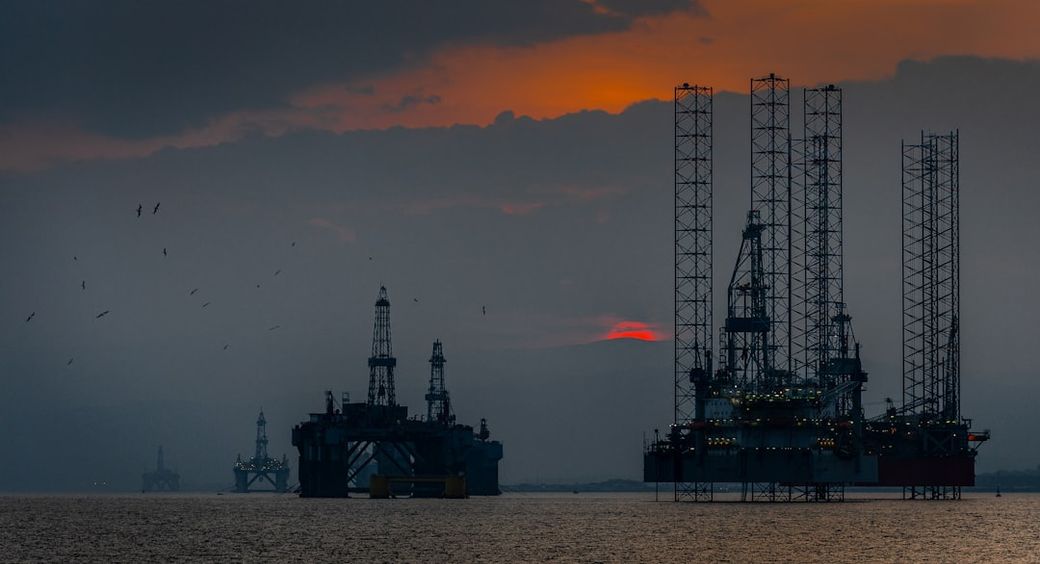
BP Plc (LSE:BP) has put its entire UK North Sea business on the block, ending more than sixty years in a basin the company helped pioneer, and it is doing so within twenty-four hours of Andy Burnham, the UK's new Prime Minister, signalling a warmer posture towards the industry.
The oil supermajor announced on Friday that it has launched a formal process to market the business for a potential sale, describing the move as part of its ongoing portfolio review and its "disciplined approach to capital allocation".
It accelerates a sweeping overhaul of the BP portfolio under chief executive Meg O'Neill, who took the helm in April and has since folded BP's three business segments into two, upstream and downstream, with the change taking effect this month.
As a reality check on the likely hyperbole around the eventual BP exit from UK waters, it should be noted that BP has been divesting assets around the world, under multiple CEOs, for a decade and a half; selling more than $40 billion of assets across more than 30 transactions in the wake of the 2010 Deepwater Horizon disaster in the Gulf of Mexico.
Some deals were about liquidity and fundraising; others focused on one new vision of BP or another with the oilers 'net zero' kick under the more recent C-Suite teams and, now, Meg O'Neill's reshaping of the group.
For the North Sea, which despite certain views from Washington is deemed to be a mature and declining domain, this will be the latest in a well-trodden trend of large-scale multinational operators selling up; more than likely to a more narrowly focused independent operator who will be geared up to manage and monetise the remaining long-tail of mature production.
BP's last piece of the North Sea up for sale
"The North Sea remains integral to the UK's energy system," O'Neill said.
"However, as we focus our portfolio and direct capital to our highest-value opportunities, we believe our North Sea business will be better positioned as part of another company.
"It has world-class people, resilient assets and a proud heritage, and it is precisely these qualities that can attract an owner ready to back its next chapter."
The package comprises five major production hubs, including Clair, the largest field on the UK continental shelf.
The assets up on the auction block are substantial by North Sea standards, less so in the context of BP's global footprint, and an eventual sale will mark the final punctuation of BP's long-held strategy in the mature basin.
BP previously sold its interest in the Forties Pipeline System, the artery serving some 85 North Sea fields, to Sir Jim Ratcliffe's INEOS for around £250 million in 2017.
The Forties sale came alongside roughly £300 million of stake sales in the Bruce, Keith and Rhum fields.
A further tranche, covering the Andrew platform and surrounding fields plus a minority holding in Shell-operated Shearwater, followed in a £474 million deal.
What was once described as reshaping has now become exiting outright.
Commercial logic meets fiscal reality
The Energy Profits Levy, introduced in 2022-23 and held at 38%, has combined with corporation tax and the supplementary charge to push the headline burden on North Sea profits to roughly 78%. This marks the UK North Sea among the highest rate of taxation applied to oil and gas anywhere in the world.
Industry bodies and lobbyists say it is a punitive, politically motivated regime. Moreover, the debate over the North Sea's true maturity and how much hydrocarbons could remain viable has, realistically, become more of a political argument than a geological one.
We can expect more sensationalism in the coming days, weeks and months as the final step in BP's North Sea exit is sure to garner attention and headlines.
What is inarguable is that the North Sea has seen a sharp pullback in investment and a resultant production decline of more than half since 2020, even during the energy crisis that followed first the outbreak of war in Ukraine and more recently in Iran.
Burnham moving the political goal posts
Andy Burnham said just a day before BP's announcement that he intends a "pragmatic" approach to developing and using North Sea resources, setting out his position after Trump said the basin should be opened up by the new PM.
Labour deputy leader Lucy Powell characterised the shift from Number 10 as a change of emphasis rather than of policy: Kier Starmer's manifesto commitment against new exploration licences stands, existing licences will be honoured, and closer engagement with industry is expected.
For BP, the timing means a seller heading for the exit precisely as the terms of trade begin to soften. And, perhaps, in that way, it is timed intentionally to target more open-minded potential buyers.
The disposal forms part of BP's broader $20 billion asset sale programme targeted for completion by 2027, sitting alongside the Castrol sale and the wind-down of BP's venturing arm.
An internal email seen, cited by a Reuters report earlier this week, also disclosed plans to reduce headcount by around 700.
In the North Sea, BP said it remains committed to operating its business safely and reliably throughout the sale process, while continuing to deliver for its customers, partners and stakeholders.
