
Amigo Resources (LSE:AMGO) announced it has completed an initial field and laboratory programme at its Musensi Hill rare earth elements project in Tanzania.
The AIM-listed explorer's geological team carried out mapping, GPS-referenced rock sampling and geochemical screening across the site following its first announcement on the project on 1 July.
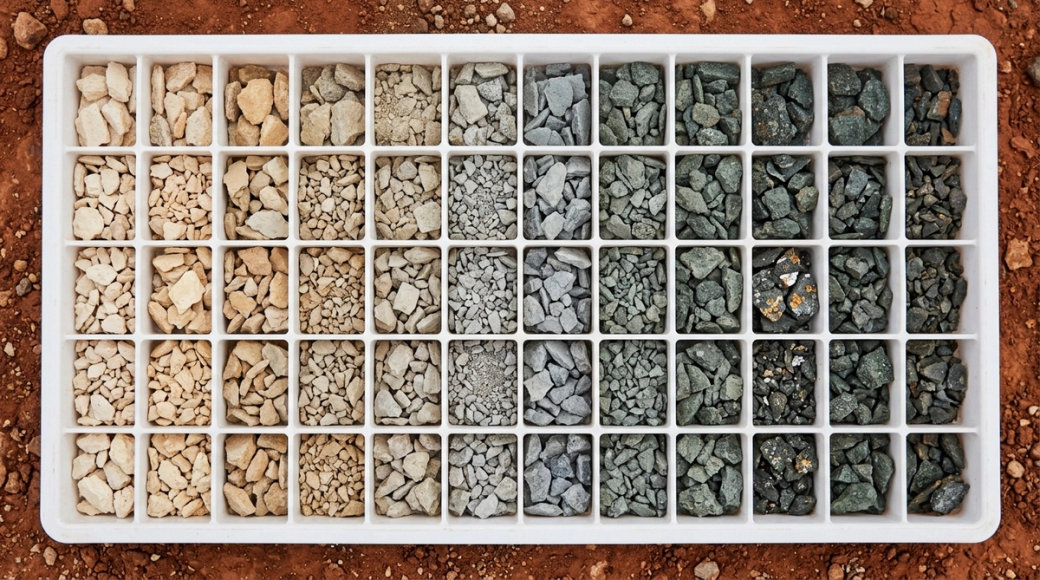
The work supports an interpretation of a multi-phase alkaline-carbonatite system hosted in granitic and granite-gneiss basement rocks, with mapped lithologies including calcitic and ferruginous carbonatite, carbonatite breccias and fragmental units.
Initial XRF screening by the Geological Survey of Tanzania found potassium oxide values of 9% to 11.7%, calcium oxide up to 15.1%, and phosphorus pentoxide reaching 7.29% in selected samples. Strontium locally reached approximately 7,000 ppm, a level the company considers an important indicator when evaluating carbonate-rich alkaline systems.
Amigo stresses this initial screening excluded a full rare earth element suite and cannot be used to infer grade, continuity or economic potential.
"Our immediate priority is to establish the mineral hosts, confirm the full REE distribution and refine the highest-priority targets, which will provide the preliminary information required to define the first-pass drilling locations," said Craig Ransley, Executive Chair of Amigo Resources.
The next phase will include complete REE analysis from lanthanum through lutetium, petrographic and mineralogical studies, and work toward defining targets for a first-pass drilling programme.
News Intelligence what this means for the company

Amigo Resources has completed initial geochemical screening at its Musensi Hill rare earth project in Tanzania, identifying elevated strontium (reaching ~7,000 ppm), potassium oxide (9–11.7%), and phosphorus pentoxide (up to 7.29%) in rock samples—indicators consistent with a carbonatite system. The company explicitly cautions that these results cannot yet indicate REE grade, continuity, or economic potential, and the next phase will include full rare earth element analysis and petrographic studies to define drilling targets.
This is early-stage exploration work that confirms the geological setting is consistent with REE-bearing carbonatite systems, but provides no quantification of resource or economic viability. The company's own statement that conclusions on grade and potential remain premature means the investment case remains dependent on results from the full REE assay and subsequent drilling.
Insights assembled by AI. Editor-reviewed and grounded in tickstock’s coverage and proprietary knowledge graph.
Content is for informational purposes only, not financial advice.
