
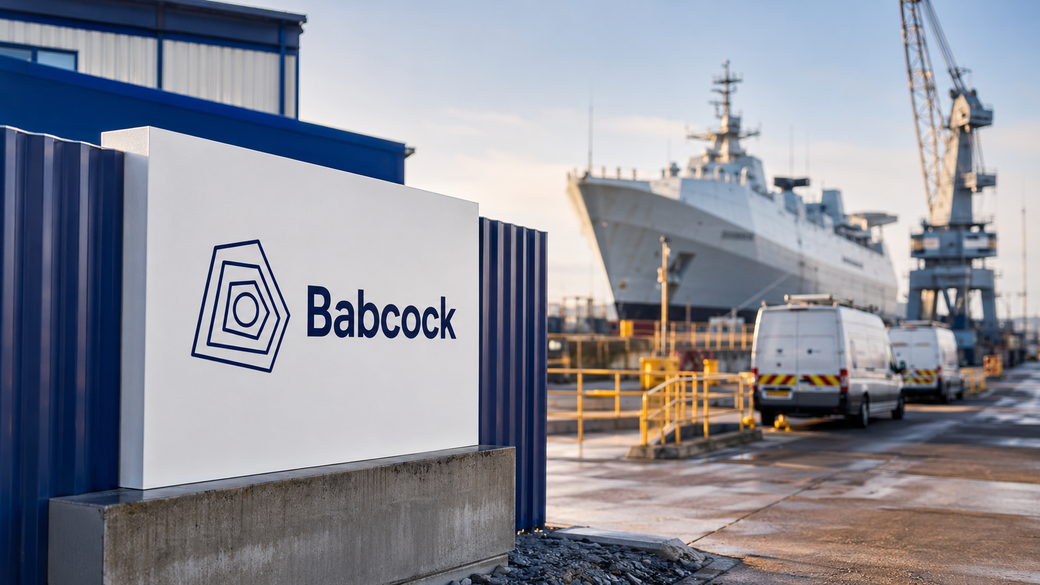
Babcock International Group (LSE:BAB) reported full-year revenue of £5.178 billion for the year ended 31 March, up 8% organically, as strong performances in Nuclear and Aviation offset a significant one-off charge on its Type 31 frigate shipbuilding programme.
The £140 million Type 31 charge, triggered by higher-than-expected rework during outfitting of the first ship and an updated cost-to-complete estimate, dragged underlying operating profit down to £293 million from £363 million in the prior year. Stripping out the charge, underlying operating profit rose 19% to £433 million, with the underlying operating margin reaching 8.2%, clearing Babcock's own 8% target. Underlying earnings per share, also excluding the charge, grew 20% to 60.5p.
The standout number was free cash flow, which jumped 71% to £262 million, driving net debt down to £329 million and covenant gearing to 0.2x. Babcock completed a £200 million buyback in April and immediately announced a further £200 million programme to run through the current financial year.
Sectorally, Nuclear revenue rose 14% and margin expanded 70 basis points to 9.5%, while Aviation grew 34%. Marine lagged, with revenue up just 2% once the Type 31 revenue reversal of £95.5 million is stripped out. Contract backlog stood at £9.8 billion, down from £10.4 billion, with the £3.5 billion Future Maritime Support Programme moving to a six-month bridge while a follow-on contract is finalised.
Chief executive David Lockwood, who departs after the results, said the group is "a more resilient business today, with clear momentum and strong visibility," and left with guidance unchanged: mid-single digit organic revenue growth, margins of at least 9% and cash conversion of at least 80% over the medium term, with FY27 expectations described as unchanged.