
First Development Resources (AIM:FDR), the UK-based, Australia-focused mineral exploration company, said integrated airborne magnetics, radiometrics and ground GAIP surveys at the Selta project's Lander West target have materially sharpened its structural model and led to a maiden drill plan due to commence mid-year.
The surveys, conducted using AMAG, RAD and Gradient Array Induced Polarisation and integrated with geological, geochemical and historical drilling, were interpreted by Resource Potentials and have identified buried granitic intrusions, major shear zones, faults and fold structures, the company said.
Interpretation highlights a large buried granite batholith in the northern licence, a potential heat and fluid source for intrusion-related Au and other anomalous elements reported in historical shallow drilling, and multiple shear-controlled corridors to the south.
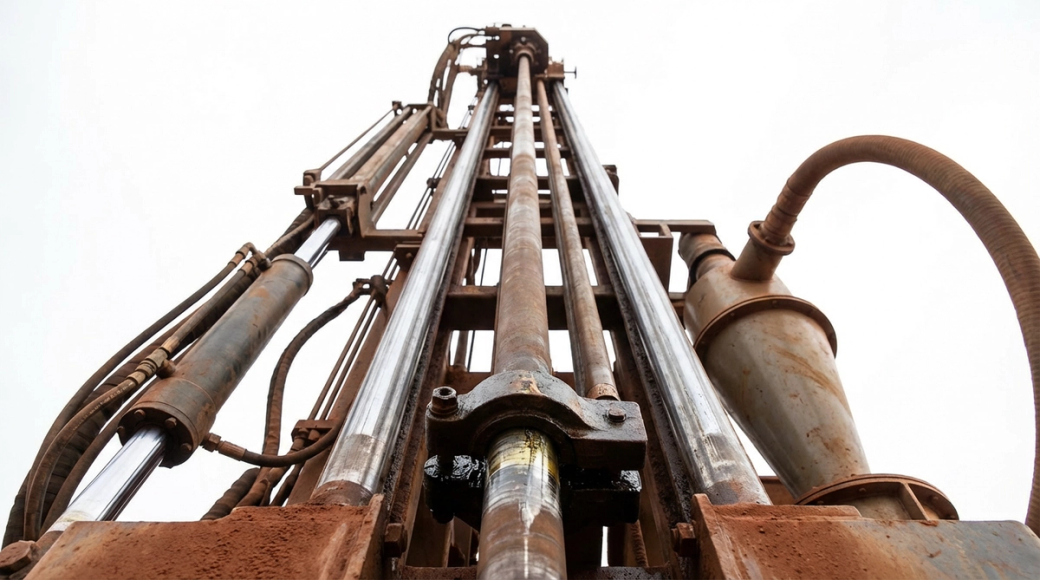
The Phase I RC programme is designed as a staged campaign of up to ~3,000 metres in two sub‑phases, starting with c.2,000 metres across ~10 priority holes followed by a flexible c.1,000 metre follow-up, with up to 16 holes provisionally planned.
FDR has secured the Environmental (Mining) Licence and the Northern Territory Notice of Authority to Commence and lists final contractor engagement, earthworks and mobilisation as the next steps ahead of mid‑year drilling.
"By combining new high‑resolution magnetic, radiometric and IP datasets with existing geological and geochemical information, we have materially improved our understanding of the structural architecture controlling mineralisation," Tristan Pottas said.
Lander West sits within the Stafford Gold Trend, where nearby exploration has returned up to 24 g/t Au and 30.6% Sb, underpinning the company's focus on shear‑hosted and intrusion‑related targets.
Results from the initial sub‑phase will be used to calibrate GAIP responses and to prioritise and refine the follow‑up holes.